English Accent
An English accent is any accent from England, and England holds an unusually wide range for its size — from Received Pronunciation through Cockney, Estuary English, Scouse, Geordie, Yorkshire and the West Country. English accents are mostly non-rhotic, dropping the R in "car", though the West Country is rhotic. The most useful split for an actor is not north versus south but which specific accent the script requires, since these accents signal class and region so strongly that audiences place them immediately.
Hear it from real speakers
Every recording below is an unscripted native speaker, not an actor performing the accent — the reference that actually matters when you're learning it.

Woolwich Accent
Woolwich, South East London, EnglandWatch
Liverpool / Scouse Accent
Liverpool, EnglandWatch
Winchester Accent
Winchester, Hampshire, EnglandWatch
Walsall Accent
Walsall, West Midlands, EnglandWatch
Barnstable Accent
Barnstable, Devon, EnglandWatch
Ilford East London Accent
Ilford, East London, EnglandWatch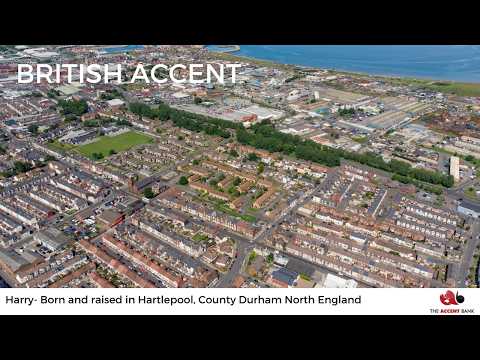
Hartlepool Accent
Hartlepool, EnglandWatch
West Country Accent
Devonshire, EnglandWatch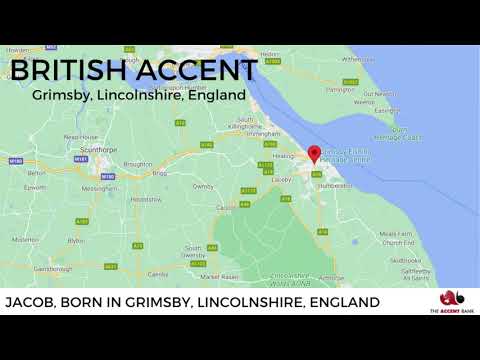
Grimsby Accent
Grimsby, Lincolnshire, EnglandWatchWhat actually separates them
The differences that matter when you're learning it — not the version you'd get from a vocabulary list.
- RP: the unmarked option
- Received Pronunciation is the traditionally non-regional English accent, associated with broadcasting, the stage and the upper middle class. It is what most scripts mean by "English" without qualification, and it is the accent most international learners acquire first — although it is spoken natively by only a small minority of English people.
- Estuary English — the modern default
- Estuary English sits between RP and Cockney and spreads along the Thames estuary and outward from London. It is arguably the most widely heard English accent today, and it is often what an actor actually needs when a script says "London" or "modern English" rather than something more specific.
- Scouse, Geordie and Yorkshire
- The northern accents are strongly distinctive. Scouse, from Liverpool, has a markedly different vowel set and a rising intonation. Geordie, from Tyneside, is one of the most distinctive accents in England. Yorkshire is broader and flatter. Northern accents generally use a short "a" in "bath" where southern accents use a long one.
- Cockney and the West Country
- Cockney is the traditional working-class London accent, known for th-fronting, glottal stops and rhyming slang. The West Country is the notable English exception to non-rhoticity: the R in "car" is pronounced, giving it the distinctive burr that makes it instantly identifiable and quite unlike any other English accent.
Common questions
What is the most common English accent?
There is no single most common English accent, but Estuary English is among the most widely heard because of its spread from London and the Thames estuary. RP remains the most internationally recognised.
Is an English accent the same as a British accent?
No. British covers England, Scotland, Wales and Northern Ireland, so a Scottish or Northern Irish accent is British but not English. English accents are one part of the British family.
Which English accent should I learn for acting?
Whichever the script specifies. If it says only "English", it usually means RP or contemporary Estuary English, but you should ask rather than assume — the difference between a northern and a southern English accent is immediately audible to a British audience.
Working on English accent for a role?
The recordings on this page are the reference. If you need correction, direction and someone to tell you when it's right, Sarah teaches this one-to-one — and there's a self-paced course if you'd rather work alone.