British Accent
There is no single British accent. "British" covers a family of accents that differ so much a Londoner and a Glaswegian can struggle to understand each other. The main branches are Received Pronunciation (the traditional RP of stage and broadcast), the southern English accents, the northern English accents such as Scouse, Geordie and Yorkshire, the Scottish accents, and the accents of Northern Ireland. Actors usually need one specific accent from this family, not "British" in general.
Where this accent is from
British accent covers more than one place, and the recordings are grouped by each of them:
England accents
14 recordings from Devonshire, Grimsby, Lincolnshire, Norfolk and more
Hear England accentsScotland accents
3 recordings from East Kilbride, Glasgow
Hear Scotland accentsNorthern Ireland accents
10 recordings from Belfast, Ballyclare, Holywood/Belfast and more
Hear Northern Ireland accentsWales is part of this family of accents too — we don't hold a recording from there yet. The collection grows, so check back, or share your accent if that's where you're from.
Hear it from real speakers
Every recording below is an unscripted native speaker, not an actor performing the accent — the reference that actually matters when you're learning it.

Woolwich Accent
Woolwich, South East London, EnglandWatch
Liverpool / Scouse Accent
Liverpool, EnglandWatch
Winchester Accent
Winchester, Hampshire, EnglandWatch
Walsall Accent
Walsall, West Midlands, EnglandWatch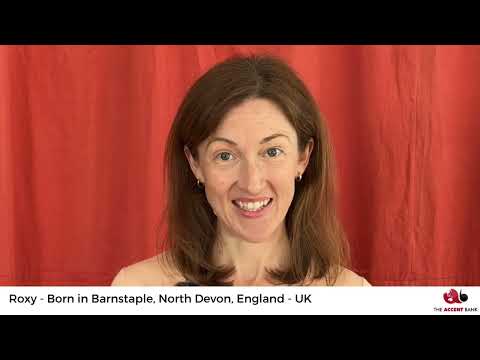
Barnstable Accent
Barnstable, Devon, EnglandWatch
Ilford East London Accent
Ilford, East London, EnglandWatch
Hartlepool Accent
Hartlepool, EnglandWatch
West Country Accent
Devonshire, EnglandWatch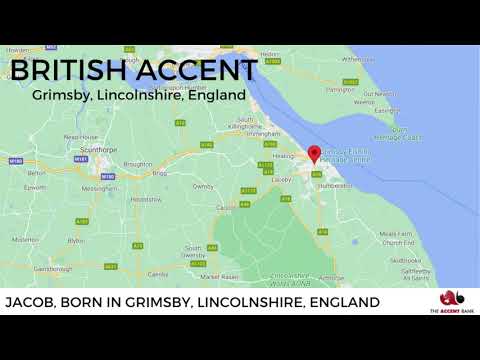
Grimsby Accent
Grimsby, Lincolnshire, EnglandWatchWhat actually separates them
The differences that matter when you're learning it — not the version you'd get from a vocabulary list.
- RP vs. Scouse
- RP is non-rhotic and famously unmarked — it drops the R in "car" and keeps its vowels long and even. Scouse, from Liverpool, is also non-rhotic but pushes the opposite way: a distinctive, much flatter vowel set and a rising, almost sing-song intonation that RP deliberately avoids. Casting directors treat them as opposites, which is why an actor asked for "British" without further detail is usually being asked for RP.
- North vs. South — the BATH vowel
- The cleanest north–south dividing line in England is the word "bath". Southern accents use a long, back vowel that rhymes with "far"; most northern accents use a short one that rhymes with "cat". It is a single sound, but it is the fastest way to place an English speaker, and it is why "British accent" is meaningless as a performance instruction.
- The R sound
- Most English and Welsh accents are non-rhotic — the R is silent unless a vowel follows, so "hard" becomes "hahd". Scottish and most Northern Irish accents are rhotic, pronouncing every R. This one feature changes the entire shape of a sentence, and it is the first thing to fix when a performance sounds "off" to a British ear.
- Not a class marker
- RP has a reputation as the "posh" accent, and regional accents still face real prejudice in the UK. For an actor this matters practically: the accent you choose signals a character's class, region and often their education before they have said anything of substance. That is usually the reason a script specifies one rather than simply "British".
Common questions
What is the most common British accent?
There is no single most common accent, but Received Pronunciation is the most widely recognised because it dominated British broadcasting for decades. In everyday use, the regional accents of England, Scotland and Northern Ireland are far more common than RP.
Is a British accent the same as an English accent?
No. English is one nation within Britain, alongside Scotland, Wales and Northern Ireland. An English accent is a British accent, but most British accents are not English — a Scottish or Northern Irish accent is equally British.
How long does it take to learn a British accent?
For one specific, well-defined accent such as RP or Scouse, most actors reach a credible performance level in six to twelve weeks of focused daily practice. The bottleneck is almost never the sounds — it is the rhythm and intonation, which take longer than the vowels to sound natural.
Working on British accent for a role?
The recordings on this page are the reference. If you need correction, direction and someone to tell you when it's right, Sarah teaches this one-to-one — and there's a self-paced course if you'd rather work alone.