Canadian Accent
The Canadian accent is rhotic and, to most listeners, very close to General American — which is why it is usually described by what it does differently rather than by a wholly separate sound. The most reliable feature is Canadian raising: the vowel in "about" and "house" is raised before a voiceless consonant, which is what makes "about" sound like "aboot" to American ears. Canadian English also has a distinctive "eh", and the "cot–caught" merger is widespread.
Hear it from real speakers
Every recording below is an unscripted native speaker, not an actor performing the accent — the reference that actually matters when you're learning it.




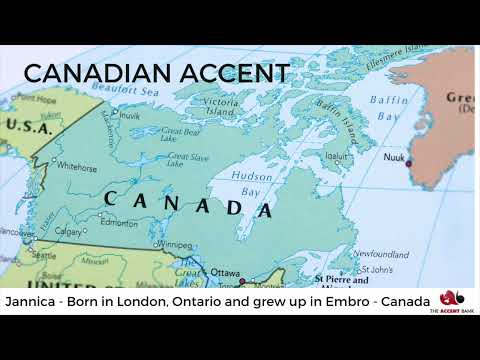

What actually separates them
The differences that matter when you're learning it — not the version you'd get from a vocabulary list.
- Canadian raising — the real "aboot"
- Canadians do not say "aboot". They raise the vowel in "about", "house" and "out" before a voiceless consonant, producing a sound that sits between the American and a Scottish-influenced vowel. The stereotype is a distortion of a genuine feature, and getting the raising right without exaggerating it is the difference between a Canadian accent and a joke.
- Almost rhotic, and that is the problem
- Canadian English pronounces every R, exactly like General American. Actors therefore find Canadian hard precisely because there is so little to grab onto — the accents are close enough that the whole performance rests on a handful of subtle features rather than on an obvious sound change.
- The cot–caught merger
- Most Canadian English merges "cot" and "caught", pronouncing them identically. This is shared with much of the western US but not with the eastern US, so it is useful for placing a character within North America rather than marking them specifically as Canadian.
- Regional variety
- Ontario, the Prairies, the Maritimes and Newfoundland differ. Newfoundland English in particular is radically distinct — closer in some respects to Irish and West Country English than to the rest of Canada — and treating "Canadian" as one accent loses it entirely.
Common questions
Do Canadians really say "aboot"?
No. That is an American caricature of a real feature called Canadian raising, where the vowel in "about" and "house" is raised before a voiceless consonant. The real sound is much subtler and does not rhyme with "boot".
Is the Canadian accent different from the American accent?
Yes, but the differences are subtle compared to most accent pairs. The clearest markers are Canadian raising in words like "about" and "house", the use of "eh", and widespread merging of "cot" and "caught".
Is there a Newfoundland accent?
Yes, and it is strikingly different from the rest of Canada — influenced by Irish and West Country English settlement. Most Canadians find it as distinctive as a foreign accent, and it should never be folded into a general "Canadian" performance.
Working on Canadian accent for a role?
The recordings on this page are the reference. If you need correction, direction and someone to tell you when it's right, Sarah teaches this one-to-one — and there's a self-paced course if you'd rather work alone.